“Chickpeas calories” looks like a simple keyword, but the reason it ranks is because people aren’t just curious, they’re trying to make decisions. Customers want to track intake, compare options, and feel confident about “healthy” menu choices. Food businesses want something else: consistent portions, consistent nutrition messaging, and fewer complaints like “this bowl was tiny” or “the sauce leaked everywhere.”
This guide gives the calorie numbers fast (100g, ½ cup, 1 cup cooked, canned drained, roasted), then explains why those numbers vary so much between labels and websites. Most importantly for Canadian restaurants, cafés, bakeries, and food operators: you’ll get a practical portion-control and packaging system that makes chickpea-based menu items scalable, profitable, and takeout-ready using KIMECOPAK solutions where they directly support consistency and customer experience.
If you’re not a restaurant owner, please share this article with friends who run a restaurant.
- Chickpea Flour (Besan): Benefits, Nutrition Facts, and How to Use It in Cooking
- Falafel Calories: How Many Calories Are in Falafel (Per Ball, Per 100g, and Per Wrap)?
- Types of Falafel You Must Know: Egyptian Ta’ameya vs Chickpea Falafel + Every Style Explained
How Many Calories Are in Chickpeas?

Calories in 1 cup cooked chickpeas (and why “1 cup” matters)
A “cup” is one of the most searched serving sizes for chickpeas, but it’s also one of the most misunderstood. “1 cup cooked chickpeas” typically refers to drained, cooked chickpeas packed into a cup measure (not including liquid). It’s a convenient reference point for customers because it’s easy to picture in a bowl.
Business takeaway: customers often think in cups, but kitchens should portion in grams for accuracy. You can still communicate “cup equivalents” on menus—just standardize what your “cup” actually means in your operation.
Calories per 100g cooked chickpeas
Calories per 100g is the most reliable reference for consistency because it avoids cup-packing differences. It’s also what nutrition-minded customers use to compare chickpeas to rice, pasta, or other bases. If you want to avoid confusion in menu labeling, a gram-based reference is your best friend.
Calories in canned chickpeas (drained & rinsed vs with liquid)
Canned chickpeas create calorie confusion because labels may reference “as sold” (with liquid) or “drained” portions. In practice, most customers eat chickpeas drained and rinsed, and most restaurants serve them that way too. That means you should track calories based on drained weight, not the full can weight.
Calories in roasted chickpeas (why it’s higher)
Roasted chickpeas are often higher in calories than boiled chickpeas because roasting recipes typically involve added oil and sometimes sugar-based seasonings. The chickpea itself doesn’t “become higher-calorie,” but the preparation method changes the final nutrition. For operators, roasted chickpeas can be a profitable crunchy topping or snack but you need portion control because it’s easy to over-serve.
Chickpeas Nutrition Basics (Macros That Explain Satiety)
Protein, carbs, fiber, fat—what a “typical serving” provides
Chickpeas are popular because they feel like “real food” that keeps you full. That perception is supported by their macro profile: they provide a meaningful combination of carbohydrates, plant protein, and fiber. For menu planning, this is a win: chickpeas can stand in as a base, a protein add-on, or a texture element—without making the dish feel “empty.”
Operator insight: chickpeas also help you reduce reliance on more expensive proteins in bowls and salads. A chickpea-forward bowl can still feel substantial when built correctly with sauce, crunch, and seasoning.
Why chickpeas feel filling (fiber + protein combo)
Most customers don’t calculate fiber, but they feel its effect: satiety. This is why “chickpea bowls,” “Mediterranean chickpea salads,” and “protein + fiber” messaging converts well in Canada—especially for lunch. If you position chickpeas as a satisfying plant-based option, you can justify premium pricing even in a competitive bowl market.
Chickpeas calories vs other common carb bases (rice, pasta, bread) — practical comparisons
Customers compare chickpeas to rice and bread because they’re choosing a base. Chickpeas tend to feel denser and more filling than many refined carb bases, which is why they’re often seen as a “better-for-you” swap. The business advantage: when customers believe a bowl is filling, they’re more willing to pay and less likely to add low-margin “extra protein” requests out of hunger.

Serving Size Calculator: Cups, Grams, and Common Portions
¼ cup vs ½ cup vs 1 cup cooked — calories and macros
For customers, these are the portions that matter most:
- ¼ cup: common for toppings or salad add-ons
- ½ cup: common “side” or moderate bowl portion
- 1 cup: common “main” chickpea portion in bowls
Restaurant reality: if your staff eyeballs these portions, you will get inconsistent calories, inconsistent cost, and inconsistent customer satisfaction. The solution is to pick one standard scoop and one standard fill level, then train to it.
100g, 150g, 200g cooked — quick lookup
Grams are how you protect your margin. If you have a standard serving like 120g or 150g per bowl, you can scale across locations, shifts, and staff skill levels. It also makes nutrition messaging easier: “approx calories” becomes more defensible when your portion is actually controlled.
Dry chickpeas vs cooked yield (why your calories “seem off”)
One of the biggest confusion points: dry chickpeas and cooked chickpeas are not interchangeable by weight. Dry chickpeas absorb water and increase in weight after soaking/cooking. So a “100g dry” portion becomes much larger once cooked. If your team tracks calories using dry weights but serves cooked weights (or vice versa), your numbers will look “wrong.” For restaurants, the fix is simple: track and portion based on drained cooked weight for service.
Canned Chickpeas Calories (The Label Confusion Explained)
Why “beans + liquid” changes the math
Canned chickpeas sit in liquid. Some labels reflect calories for the product as sold; others provide a drained serving suggestion. Customers often read the label, then weigh drained chickpeas at home and get confused when it doesn’t match.
Operator takeaway: for menu accuracy, focus on what customers actually consume—drained and rinsed chickpeas.
Drained and rinsed: what you should count
In most restaurant workflows, chickpeas are drained and rinsed before use. That is the serving reality. If you want consistent nutrition messaging and consistent cost control, measure the drained chickpeas weight and portion from there.
Best practice for consistent tracking (weigh drained chickpeas)
If you want a clean SOP:
- Drain and rinse chickpeas
- Let them drip for a standard time (e.g., a brief drain)
- Weigh the batch
- Portion using a defined scoop or scale target
This improves consistency in three places: calories, cost, and customer experience.
How Cooking Method Changes Chickpeas Calories
Boiled/steamed chickpeas (baseline)
Boiled/steamed chickpeas are the baseline reference for most calorie charts. They’re the most “neutral” and easiest to standardize in a kitchen. For operators, boiled chickpeas also absorb seasoning well, which means you can add high-impact flavor without adding a lot of extra calories—lemon, herbs, spices, vinegar-based dressings.
Roasted chickpeas (added oil, higher calories)
Roasted chickpeas are often used as:
- A crunchy topping for salads and bowls
- A snack item
- A garnish that adds texture and perceived value
But roasting frequently includes oil. That can bump calories and cost. This is not a problem—unless you portion inconsistently. Roasted chickpeas should be treated like croutons: delicious, but controlled. A measured scoop (or a small portion cup) keeps your calories and margins predictable.
Chickpeas in hummus and falafel (why calories differ from plain chickpeas)
Customers often think “chickpeas are healthy, so hummus and falafel are the same.” They’re not. Once you turn chickpeas into hummus, you typically add tahini and oil. Once you turn chickpeas into falafel, you often fry them. That changes calories significantly.
Business-first move: when your menu includes chickpea-derived items, be clear:
- Chickpea salad or chickpea bowl is one calorie profile
- Hummus is another
- Falafel is another
This clarity builds trust, especially for health-oriented customers in Canada who choose restaurants based on transparency.
If you sell falafel, your takeout success often depends on steam control and sauce containment. A reliable sauce system like Disposable Portion Cups helps you keep the bread/bowl from getting soggy and keeps portions consistent.

For Restaurant Owners in Canada: Portion Control That Protects Margin and Reviews
Choose a standard serving size (grams per bowl/wrap)
If you want chickpea-based items to be profitable and consistent, pick a standard serving size and make it non-negotiable. Examples of where chickpeas appear on menus:
- Chickpea salad bowl
- Mediterranean grain bowl (chickpeas as protein)
- Side of chickpeas
- Roasted chickpea topping
- Chickpea + veggie wrap filling
Each should have a defined grams target. Why? Because even a small over-serve repeated all day becomes real money. And the customer notices inconsistency: one day the bowl is generous, the next day it’s sparse.
Build a “calorie-consistent” scoop system (tools + training)
A scoop system is your fastest path to standardization:
- Choose a scoop size that maps to your grams target
- Train staff on “level scoop” vs “heaping scoop”
- Use a scale during training and spot checks
- Make it easy: one scoop, one standard, one result
If you run bowls, align your scoop system with your container system. When bowl size and scoop size match, your team naturally portions more consistently.
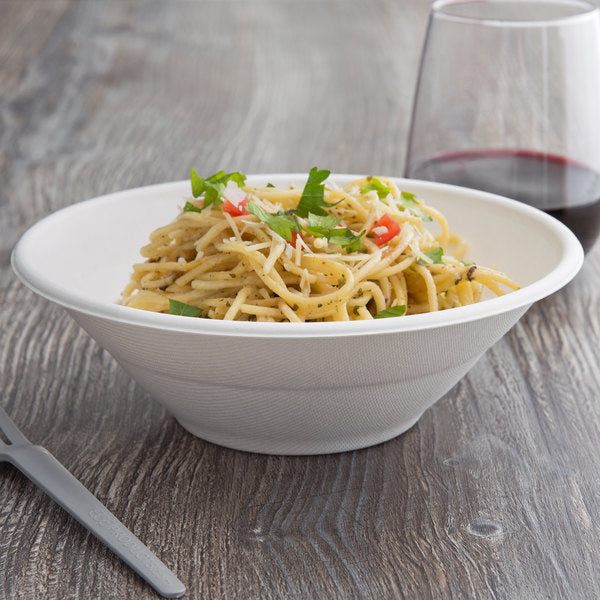
A bowl that supports a defined portion and still gives customers room to mix and eat comfortably is a key operational choice. Explore Paper Bowl options that help you standardize portion presentation while staying takeout-ready.
Want to lock in portion control and takeout performance for chickpea bowls, salads, hummus, and sauces?
GET FREE SAMPLE NOW OR REQUEST A QUOTE so you can test the right bowl sizes, lids, and portion cups for your menu and delivery workflow.
Sauce economics: portion cups for tahini/hummus (control calories + cost)
Sauce is where calories and cost explode quietly. A “little extra tahini” can turn a bowl from moderate to heavy and it can turn your food cost from stable to chaotic. The simplest fix is to standardize sauce portions with portion cups:
- One standard sauce portion per bowl
- Optional paid extra
- Clear labels to reduce mistakes
- Tight lids to prevent leaks
Labeling SOP: “approx calories” without confusing customers
Many operators want to publish calories but fear being “wrong.” Here’s a practical approach:
- Use “approx” language
- Base it on your standardized portion (grams)
- Keep it consistent across channels (menu, online ordering, signage)
- Update when your recipe or serving changes
The biggest risk isn’t being off by a small number; the biggest risk is inconsistency. If your portions swing, your calories swing, and customers lose trust.
Mid-service checklist (prep, holding, and waste control)
If chickpeas are part of your daily menu, add a quick checklist:
- Chickpeas drained consistently (not watery, not dry)
- Seasoning standardized (same taste daily)
- Portion tools available (scoops, cups, scale)
- Sauce cups pre-portioned during prep time
- Containers/lids staged for speed
- Labels ready for sauce types and dietary notes
This checklist protects your two most valuable assets: speed and consistency.
FAQs about Chickpeas Calories

Are chickpeas high in calories?
Chickpeas are moderate in calories and are often considered filling because they contain fiber and plant protein. Whether they feel “high” depends on portion size and preparation method (boiled vs roasted with oil, hummus with tahini, falafel fried).
How many calories are in 100g of chickpeas?
Many nutrition references use 100g cooked chickpeas as a standard comparison point. For the most accurate tracking, use cooked, drained weight and keep your portion consistent.
How many calories are in a cup of chickpeas?
A cup is a common reference for cooked chickpeas, but the exact calories can vary because “1 cup” can be packed differently. For consistency, restaurants should portion by grams, then translate to “cup equivalents” for customer-friendly messaging.
How many calories are in canned chickpeas (drained)?
Canned chickpeas vary by brand and how thoroughly they’re drained and rinsed. For practical tracking, measure the drained weight you actually serve rather than relying only on the “as sold” label.
Are chickpeas good for weight loss?
Many customers include chickpeas in weight-loss plans because they’re filling. The key is portion and preparation: boiled chickpeas with vegetables and controlled sauce portions will feel very different from fried or oil-heavy chickpea items.
Why are roasted chickpeas higher in calories?
Roasted chickpeas are often cooked with added oil (and sometimes sweet seasonings). The added fat increases calories. Portion control is the easiest way to keep roasted chickpeas as a profitable, satisfying add-on without over-serving.
Conclusion: The Simple Chickpeas Calorie Rule + Next Step for Operators
When customers search chickpeas calories, they usually want three practical reference points: a grams-based number (100g), a moderate serving (½ cup), and a bigger serving (1 cup). The exact calories can vary by brand, drainage, and preparation method—but consistency comes from measuring what you actually serve.
For Canadian food businesses, the real win isn’t memorizing a calorie chart. The real win is building a repeatable system:
- Portion chickpeas by grams
- Standardize sauce servings with portion cups
- Choose bowls that naturally fit your target portion
- Label simply and consistently
- Use packaging that prevents leaks and keeps presentation intact