Idli is more than a dish. It is breakfast for millions of people. These soft, steamed rice-and-lentil cakes have been eaten with sambar and coconut chutney for centuries, prized for being light, nourishing, and deeply comforting.
In Canada, the South Asian diaspora has made idli a staple in cities like Brampton, Surrey, Toronto, and Mississauga. It is a Sunday-morning classic in many homes, a comfort food for students far from home, and an increasingly popular choice among non–South Asian Canadians discovering its clean, balanced flavor.
For food businesses, idli offers strong margins, scalable production, and loyal repeat customers. But serving it well at volume, especially for takeaway and delivery, requires understanding not just the recipe, but the batter, the workflow, and the packaging. This guide explores idli’s cultural roots, main types, commercial preparation, Canadian pricing, and the key packaging mistakes many restaurants still make.
- How to Make Mint Chutney For Sandwich, Idli, Dosa & Vada
- Indian Street Food: Complete Guide for Restaurants & Food Businesses in Canada
- From India to Your Table: A Guide to Garlic Chutney
- Indian Food Calories: A Practical Guide to Dishes, Takeout Portions & Smarter Combos
What Is Idli — And Why It Belongs on Every South Asian Menu in Canada

The Cultural and Historical Significance of Idli
Idli's documented history reaches back to at least 920 CE, when a Kannada-language text referred to a dish called "iddalige" made from black gram batter. By the 12th century, Sanskrit encyclopedias were describing it with recognizable precision — soaked lentils, fermentation, steamed cakes. For over a thousand years, this dish has sustained South India through monsoons, festivals, morning markets, and family kitchens.
The dish entered Canada through immigration, first arriving in institutional form at Udupi-style restaurants in the 1980s and 1990s, and later expanding as the South Asian population grew into one of the largest and fastest-growing demographic communities in the country. Today, South Indians represent a significant and economically active segment in cities across Ontario, British Columbia, and Alberta — and idli is the dish they seek out most reliably when they want to feel at home.
What this means commercially: a well-made idli carries emotional weight that drives repeat visits, word-of-mouth, and community loyalty at a level very few menu items can match.
Why Idli Is One of the Most Commercially Viable South Indian Menu Items
Idli's ingredient cost is genuinely low. Parboiled rice (idli rice), urad dal (hulled black gram), fenugreek seeds, and salt. That is the entire ingredient list for the foundational product. Food cost per portion — four to six pieces with sambar and coconut chutney — typically runs $1.00–$2.00 CAD depending on market, making it one of the lowest food-cost items on any South Asian menu.
The batter is batch-producible in large volumes and refrigerates well for up to five days, meaning a kitchen can prep once and serve fresh idli across an entire week's service without daily batter production. For catering operations, this is a significant operational advantage.
It is also naturally vegan and gluten-free — two dietary profile points that carry real menu value in the Canadian market, where vegan and gluten-free labeling increases order frequency from a meaningful portion of diners.
The Main Types of Idli — And Which Varieties Work Best for Commercial Service
Traditional Idli (The Foundation of Every South Indian Menu)
Made from a fermented batter of parboiled idli rice and urad dal in a 3:1 ratio, steamed in specialized idli moulds for 10–12 minutes. The result is white, cloud-soft, and mildly tangy from fermentation. This is the canonical version — the dish customers expect when they order idli, and the one that serves as the baseline for every other variation.
Commercial note: Traditional idli is non-negotiable on a South Indian menu. If it is not perfectly soft and fluffy, customers will notice and will not return. The quality of this dish is the single most reliable indicator of a kitchen's overall standards.
Rava Idli (Semolina Idli — The Fast-Production Workhorse)
Rava idli substitutes semolina (suji/rava) for the rice component of the batter and does not require fermentation. Cashews and mustard seeds are typically added for texture and flavor. It can be prepared and served within 30 minutes, making it the most practical choice for high-volume service periods or catering contexts where the overnight fermentation timeline is a constraint.
Rava idli is slightly denser and less tangy than traditional idli but has excellent holding properties — it stays acceptably soft for longer after steaming, which matters enormously for delivery and buffet service.
Best for: Catering operations, delivery menus, tiffin services, and any format where batch production flexibility is essential.
Mini Idli (The Presentation and Portion-Control Format)
Mini idli — bite-sized versions of traditional idli, typically served in sets of 10–15 — have become one of the most popular formats at South Indian restaurants across North America. They are served dipped in sambar in a small bowl (sambar idli format) or tossed in ghee and podi (spiced lentil powder). The mini format increases perceived value, photographs exceptionally well, and is particularly effective for catering platters and children's menus.
Best for: Dine-in service, catering events, social media marketing, and family-oriented menus.

Thatte Idli (Large-Format, Karnataka-Style)
Thatte idli — named for the flat tray (thatte = plate) in which it is steamed — is a significantly larger, flatter idli popular in Karnataka and now widely served at premium South Indian restaurants in North America. It is softer and more porous than standard idli due to the addition of poha (flattened rice) to the batter, and its size creates a premium presentation at the table.
Best for: Restaurants looking to differentiate their idli offering and justify $12–$16 CAD pricing for a plated entree.
Kanchipuram Idli (Spiced, Temple-Style)
A traditional temple prasad idli from Tamil Nadu, made with black pepper, cumin, ginger, and ghee folded into the batter before steaming. The spicing makes it aromatic and more robustly flavored than standard idli, and it holds well at room temperature — an important practical consideration for catering service.
Best for: Catering menus, weddings and religious events, and restaurants looking to add a premium specialty item with a heritage story.
Podi Idli and Ghee Idli (High-Margin Value-Adds)
Podi idli — traditional idli tossed with sesame oil and gunpowder (milagai podi, a dry spiced lentil powder) — and ghee idli — finished with cultured butter and served with extra sambar — are both simple preparations that transform a standard idli serving into a higher-margin menu item with minimal additional labor or cost.
Best for: Menu engineering. Both formats allow a 30–40% price premium over plain idli with negligible additional food cost.
Idli Batter: The Science and Commercial Formula
Understanding Fermentation — The Non-Negotiable Step
The fermentation of idli batter is not simply a flavor step — it is a biological transformation that changes the entire character of the final product. During fermentation, naturally occurring bacteria (primarily Leuconostoc mesenteroides and Enterococcus faecalis) produce carbon dioxide that leavens the batter, and lactic acid that develops the characteristic mild tanginess of traditional idli.
More importantly for nutritional claims: fermentation increases the bioavailability of iron and folate, reduces phytic acid (an anti-nutrient that blocks mineral absorption), and breaks down starches and proteins into more easily digestible forms. This is the genuine scientific basis for idli's well-documented reputation as one of the healthiest breakfast foods — a claim that carries marketing value with health-conscious Canadian consumers.
For commercial production in Canadian winters: fermentation at room temperature is significantly slower than in South Indian climates. The standard workaround is to use a turned-off oven with just the light on, which maintains approximately 30–35°C — the optimal fermentation temperature. Allow 12–20 hours rather than the 6–8 hours common in South India.
The Commercial Batter Formula — Rice to Dal Ratio for Volume Production
The fundamental ratio for traditional idli batter is 3:1 — three parts parboiled idli rice to one part whole urad dal (hulled black gram). The addition of one teaspoon of fenugreek seeds per cup of urad dal promotes fermentation and contributes to softness.
Standard commercial batch (yields approximately 60–70 standard idli):
- 3 cups idli rice (parboiled short-grain)
- 1 cup whole urad dal
- 1 tsp fenugreek seeds
- 2 tbsp poha (flattened rice) — added before grinding for improved softness
- Salt to taste — add only after fermentation is complete
Soak rice and urad dal separately for 6–8 hours. Grind urad dal first to a frothy, airy paste — this aeration is the primary driver of idli softness. Grind rice to a slightly coarser consistency. Combine, mix well by hand (body heat from hand mixing improves fermentation), and ferment for 12–20 hours at 30–35°C.
The Batter Consistency Test for Commercial Kitchens
Correct batter consistency: when a ladle of batter is poured, it should flow slowly and hold a slight mound before settling. It should not pour like water (too thin — flat, dense idli) or stand completely stiff (too thick — hard, undercooked center).
For high-volume production: always test-steam a small batch before full service, adjusting with small amounts of cold water if the batter is too thick after refrigeration overnight. Cold batter thickens, and idli made from cold batter without adjustment will be denser and less fluffy than intended.
Batch Production and Refrigeration Guidelines
Fermented idli batter refrigerates well for up to 5 days without significant quality degradation, though tanginess increases with each passing day. For commercial kitchens, a weekly batter production schedule — producing Monday and Thursday — maintains consistent freshness across the service week.
Do not add salt to batter before fermentation. Salt inhibits fermentation by drawing water from the lentils and slowing bacterial activity. Add salt only when the batter is ready to use.
Partially used batter should be returned to the refrigerator promptly, not left at room temperature, as continued fermentation at kitchen temperature will make the batter increasingly sour and eventually unusable.

Idli on a Restaurant Menu: Pricing, Margins and Positioning for Canadian Markets
Food Cost and Margin Analysis
Traditional idli's food cost economics are exceptional. The complete idli sambar plate — 4 idlis, sambar, and coconut chutney — has a food cost of approximately $1.50–$2.50 CAD in Canadian markets (rice, dal, lentil broth ingredients, coconut). At typical South Indian restaurant pricing of $9–$13 CAD for the plate, this represents a food cost percentage of 15–22%.
Rava idli costs slightly more due to semolina and cashews, but commands the same or slightly higher pricing. Thatte idli and Kanchipuram idli — by virtue of their premium positioning and specialty ingredient profiles — can price at $12–$16 CAD as plated items.
Menu Pricing Benchmarks for Canadian South Indian Restaurants
• Idli sambar (4 pcs): $9–$12 CAD
• Rava idli (2 pcs): $10–$13 CAD
• Mini idli (10 pcs, sambar-dipped): $11–$14 CAD
• Thatte idli (3 pcs): $12–$16 CAD
• Podi idli / Ghee idli (4 pcs): $11–$15 CAD
• Kanchipuram idli (4 pcs): $12–$15 CAD
• Idli breakfast combo (idli + vada + filter coffee): $16–$21 CAD
The combo format is worth highlighting specifically for dine-in service. An idli-vada-coffee combo priced at $18–$20 CAD is a high-perceived-value offering that substantially increases average check size while improving operational efficiency by standardizing order composition.
Positioning Idli for the Canadian Market
South Indian restaurants in Canadian cities face a dual audience challenge: serving the South Asian diaspora community (who know exactly what idli should taste like and will evaluate quality with precision) while also appealing to non-South Asian Canadians who may be encountering idli for the first time.
The most effective positioning approach for both audiences leads with the nutritional and dietary profile: naturally vegan, gluten-free, fermented for digestive benefit, oil-free, and low-calorie. These are genuine claims with scientific backing, and they resonate strongly with the Canadian health-conscious dining demographic. Labeling idli clearly as vegan and GF on menus increases visibility to a customer segment that actively filters for these options on delivery platforms.
The Idli Packaging Problem: What Goes Wrong Between Your Kitchen and Your Customer
Why Idli Is One of the Most Packaging-Sensitive Foods in South Asian Cuisine
Idli is a steamed food. Unlike fried foods that go soggy when moisture returns, idli's challenge is the opposite: it must be kept warm and moist, but it cannot be compressed or sit in pooled liquid without becoming gluey and losing its texture completely.
The specific problems that destroy idli quality in transit:
• Condensation pooling at the base of a sealed plastic container — idlis sitting in warm water become waterlogged and lose all structural integrity within 15 minutes
• Excessive compression from a tight-fitting lid — idlis are delicate and compress easily, especially when warm
• Sambar spilled onto idli during transit — idlis that have been sitting in sambar for 20 minutes are texturally indistinguishable from mashed food
• Thermal loss in plastic containers — thin plastic conducts heat rapidly outward, and idlis served cold are categorically different food from idlis served warm
This is not a hypothetical problem. Read the negative reviews for any South Indian restaurant on DoorDash or Uber Eats, and the complaints are almost always the same: "idlis were soggy," "sambar spilled into the container," "arrived cold and stuck together." These are packaging failures, not cooking failures.
The Container Problem: Why Conventional Plastic Clamshells Fail Idli
Standard sealed plastic clamshell containers trap all moisture inside. Steam from freshly made idli has nowhere to go and condenses on the interior container walls. That water drips back onto the idli. In a sealed plastic container, a portion of four idli will begin accumulating surface moisture within 8 minutes of packing. By 20 minutes, the base-contact surface of the idlis is wet.
A secondary problem specific to idli: the condensation not only softens the surface texture, it causes the individual idlis to stick together when they cool, making it difficult for customers to separate them cleanly. This is a quality complaint that generates negative reviews and reduces repeat orders.
The Sambar Packaging Problem — Separate Is Non-Negotiable
Sambar is a hot lentil and vegetable stew, and it is the primary accompaniment to idli. It is also a leak risk. Any restaurant serving idli for delivery that packs sambar in a container without a secure, leak-proof lid is operating with a significant customer satisfaction risk on every order.
Sambar packaged in thin plastic soup cups without proper lids will leak during the movement of delivery. When sambar enters the idli container, it is absorbed immediately — transforming the idli from a distinct textural food into a unified mush. This failure mode is entirely preventable with the right sauce cup format.
The Right Eco-Friendly Packaging for Idli: A Canadian Restaurant's Guide
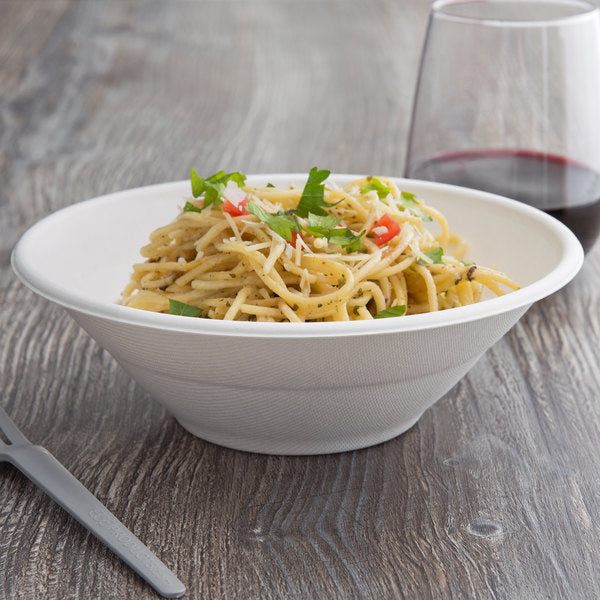
Bagasse Containers: Why Sugarcane Fiber Is the Best Material for Steamed Foods
Bagasse — the fibrous residue from sugarcane juice extraction — when molded into food containers produces a material that behaves fundamentally differently from plastic for steamed, high-moisture foods like idli.
The natural fiber matrix of bagasse allows controlled vapor transmission. Steam from hot idli can migrate through the container walls rather than condensing inside the container and returning as liquid water. This means idli maintains its soft, non-sticky surface for meaningfully longer in a bagasse container than in any sealed plastic format.
Additionally, bagasse containers retain heat effectively — the fiber structure insulates without conducting heat outward rapidly the way thin plastic does. Idli packaged in a bagasse container and delivered over a 20-minute period arrives noticeably warmer than the same idli in a conventional plastic clamshell.
Bagasse containers also satisfy a distinct consumer preference in the Canadian market. Sustainability and environmental responsibility are actively evaluated purchasing criteria for a growing segment of Canadian diners, particularly in the 25–45 demographic that represents a significant portion of delivery platform users. Bagasse containers are certified compostable in 60–90 days in commercial composting facilities, and many Canadian municipalities accept them in the green bin.
KimEcopak's bagasse containers are grease-resistant, water-resistant, and food-grade certified for hot foods. Available in sizes that suit idli portions.
Compartment Containers: The Practical Solution for Idli Sambar Plates
The complete idli meal — idli, sambar, coconut chutney, and sometimes a third chutney (tomato, peanut, or ginger) — involves multiple components that must travel separately to maintain quality. The professional solution is a multi-compartment container that keeps each component isolated during transit while still delivering everything in a single, organized package.
Bagasse compartment trays (typically 3–5 compartments) allow a restaurant to pack idli in the largest compartment, sambar in a sealed insert, and chutneys in smaller side compartments — all within a single container unit. The idli never contacts the sambar until the customer chooses to combine them.
This format also improves the customer unboxing experience, which matters for reviews and repeat ordering on delivery platforms. An organized, thoughtfully packaged meal signals professionalism and care — and customers will say so in their reviews.
KimEcopak stocks multi-compartment bagasse containers suited to South Indian meal formats. See the full selection at kimecopak.ca/collections/food-containers.
Kraft Paper Sauce Cups With Secure Lids: The Sambar Solution
For sambar and chutneys specifically, the packaging choice is clear: kraft paper soup cups with PLA (plant-based) or fiber lids that lock in place. Unlike fold-tab lids that can open during transit, secure-lock lids on sauce cups prevent sambar spillage entirely.
The kraft paper cup with PLA lining is liquid-resistant, heat-stable to temperatures appropriate for sambar service, and compostable alongside bagasse containers — meaning a restaurant can maintain a fully compostable packaging system without mixing materials.
- Sambar: 6 oz kraft paper cup with secure lock lid — appropriate for a single serving
- Coconut chutney: 2 oz kraft paper sauce cup — standard individual portion
- Additional chutneys: 2 oz kraft paper sauce cup per variety
Providing sauce cups with secure lids adds minimal cost per order (typically $0.15–$0.30 CAD per cup) while almost entirely eliminating the spillage complaints that damage delivery ratings.
KimEcopak's kraft paper sauce cups are available in 2 oz and 6 oz sizes with compatible lids, suitable for all South Indian sauce and chutney applications.
Packaging for Idli Catering: Transport vs Service Presentation
Catering service for idli — at South Asian weddings, corporate events, cultural festivals, and community functions — requires a different packaging strategy than individual restaurant delivery.
- For transport: large bagasse catering trays with dome lids allow high-volume idli to be transported stacked without compression. Unbleached parchment between layers prevents idlis from sticking together during transit. Sambar is transported separately in commercial-grade insulated containers.
- For buffet service: open-top bagasse serving trays create a natural, premium presentation that photographs well and signals environmental awareness — two qualities increasingly valued at events catering to South Asian professional communities in Canada.
- For events where individual plating is required: each guest can receive a pre-plated bagasse tray with 3–4 idli and sauce cups for sambar and chutney, assembled in advance and covered with a dome lid for warmth retention.
Serving Idli for Catering and Events in Canada
South Asian Catering: Understanding the Market
South Asian events — weddings, engagements, religious functions, Diwali and Pongal celebrations, and business gatherings — represent a substantial and growing catering market in Canadian cities. Toronto, Brampton, Surrey, Calgary, and Edmonton each have large and economically active South Indian communities that specifically seek authentic South Indian catering for their events.
Idli is almost always present at South Indian breakfast catering spreads, typically alongside vada, upma, pongal, and filter coffee. A caterer that can reliably produce 400–600 high-quality idlis for a morning event, serve them at the right temperature with properly packaged sambar and chutneys, and maintain quality across a 2–3 hour buffet window is a highly valued operator in this market.
Portion Sizing and Batch Planning for Events
Standard catering portions: 3–4 idlis per person for a breakfast item, 2 idlis per person if part of a larger multi-item breakfast spread. For a 200-person event with a 4-item breakfast menu, planning for approximately 400–500 idlis is appropriate.
Batter volume planning: a standard commercial batch (3 cups rice, 1 cup urad dal) yields 60–70 standard idlis. For a 500-idli catering order, produce 8–9 batches, factoring a 10% buffer for damaged or malformed pieces.
Production schedule: for a morning event, batter should be prepared 18–24 hours in advance to allow full fermentation. Idlis are best steamed the morning of the event, no more than 2 hours before service. Pre-steamed idlis held in insulated containers for more than 2 hours will lose quality.

Keeping Idli Warm and Soft at Buffet Service
Idli held at buffet requires active warmth management. The most effective method: steam idlis in batches timed to buffet service (every 30 minutes), rather than producing everything upfront. This maintains fresh-steamed quality across the service window.
If batch timing is not possible: cover buffet containers with dome lids or clean cloth covers to trap steam. Never use open hotel pans for idli — the exposed surface dries and hardens within 15 minutes. Idli that has hardened on the surface is a significant negative at a catering event and will generate feedback.
Idli FAQ for Restaurant Operators and Food Business Owners
How Do I Get Consistent Soft Idli in a Canadian Kitchen?
The two most common failure points for idli made in Canadian kitchens are insufficient fermentation (due to colder ambient temperature) and over-grinding the urad dal. For fermentation: use the oven-light method — a turned-off oven with just the light on creates approximately 30°C, sufficient for reliable fermentation in 14–20 hours. For grinding: the urad dal batter should be whipped to a frothy, airy consistency — this aeration is the primary driver of softness and cannot be compensated by any other step.
Can Idli Be Made Ahead and Reheated for Commercial Service?
Yes, with important caveats. Steamed idli can be refrigerated for up to 2 days. Reheating: steam for 5–6 minutes (preferred — restores original soft texture), or microwave with a damp paper towel cover for 45–60 seconds. Do not microwave without covering — uncovered microwave reheating dries the surface immediately and makes idli rubbery. For best commercial results, steam fresh daily and refrigerate unused batter rather than pre-steaming large batches.
What Is the Best Way to Package Idli for Delivery?
Bagasse clamshell or compartment container for the idli itself, with kraft paper sauce cups with secure lids for sambar and chutneys. Pack the components separately — never pour sambar directly onto idli before sealing the delivery container. Instruct customers to combine components at time of eating. This single change eliminates almost all of the texture-degradation complaints associated with idli delivery.
How Do I Market Idli to Non-South Asian Customers in Canada?
Lead with the nutritional claims — naturally vegan, gluten-free, oil-free, fermented for gut health. These are the accurate descriptors that resonate with health-conscious Canadian diners who may not have prior experience with South Indian food. Describe the texture and flavor in approachable language: "like a very light, soft steamed rice cake" or "similar to a gentle soufflé texture, served with a spiced lentil soup." On delivery platforms, photograph the dish with all components presented clearly — the sambar and chutney are as visually appealing as the idli itself.
Where Can I Source Eco-Friendly Packaging for Idli Delivery in Canada?
KimEcopak supplies certified compostable packaging — bagasse containers, multi-compartment trays, kraft paper sauce cups, and dome lids — to South Asian restaurants, catering operations, and food trucks across Canada. All products are food-grade certified and appropriate for hot, moist foods like idli sambar. Free sample packs are available for businesses evaluating packaging options before committing to volume orders.
Visit kimecopak.ca to browse the full product range, or reach out through kimecopak.ca/pages/contact to discuss volume pricing and packaging customization for your operation.
Is Idli Suitable for Meal Prep or Tiffin Services?
Idli is an ideal product for tiffin and meal prep services. Fermented batter stores for up to 5 days in the refrigerator, enabling daily small-batch steaming without daily batter production. Freshly steamed idlis packed in compartment containers with sealed sauce cups maintain acceptable quality for 60–90 minutes at room temperature — sufficient for morning tiffin delivery windows. For extended delivery windows, rava idli holds better than traditional idli due to its denser texture.
Conclusion: Idli Is a Business Asset, Not Just a Menu Item
Very few foods carry the weight that idli carries. It is not just a breakfast dish — it is an identity marker, a community touchstone, and for millions of South Indians living in Canada, the most reliable way to feel connected to home. When a restaurant makes idli well, it earns a loyalty that is nearly impossible to displace.
But making idli well is only half the equation. The other half is delivering it well. The technical excellence of your kitchen means nothing if the idli that reaches your customer has been destroyed by inadequate packaging. Waterlogged idlis in plastic containers, spilled sambar, cold and sticky pieces — these are avoidable failures, and they represent the clearest operational differentiator between South Indian restaurants that build strong delivery businesses and those that struggle to retain delivery customers.
Get the fermentation right. Master the batter. Invest in packaging that is engineered for steamed, high-moisture foods. And build the commercial infrastructure — pricing, batch production, catering capacity, multi-component packaging — that lets you serve idli not just as one menu item, but as the centerpiece of a genuinely strong South Indian food business in Canada.