


Choosing the best oil for deep frying can affect more than the flavour and crispiness of your food. For restaurants, cafés, food trucks and other foodservice businesses, the right oil also influences frying consistency, operating costs and how often you need to replace it. Refined canola, high-oleic sunflower and soybean oils are common options, but they do not all perform the same way under repeated high heat. This guide compares six frying oils and explains how to choose one for your menu, manage oil quality and serve fried foods that stay appealing after cooking.
What Makes an Oil Suitable for Deep Frying?
A good deep-frying oil should withstand repeated exposure to heat without developing unpleasant flavours, excessive smoke or rapid deterioration. It should also have a neutral taste, work with your menu and fit your kitchen's operating budget.
For commercial kitchens, evaluate five factors before choosing an oil.
- Heat tolerance: The oil should suit the temperatures required by your recipes and equipment.
- Oxidative stability: Oils with better resistance to oxidation generally maintain quality longer during repeated frying.
- Flavour: A neutral oil lets the natural flavour of fried chicken, seafood, vegetables and potatoes stand out.
- Cost and availability: A slightly more expensive oil may offer better value if it performs well across more frying cycles.
- Fat composition: The balance of monounsaturated, polyunsaturated and saturated fats can influence how an oil behaves during heating.
Why Smoke Point Is Not the Only Factor
Smoke point is the temperature at which an oil begins producing visible smoke. It is useful when comparing cooking oils, but it does not tell the whole story.
An oil can have a relatively high smoke point and still deteriorate quickly during repeated frying. Oxidative stability also depends on its fatty acid composition, refining process, natural antioxidants, exposure to oxygen, moisture and food particles.
For example, high-oleic sunflower oil has a different fatty acid profile from conventional sunflower oil. The high-oleic variety contains more monounsaturated fat, which generally makes it more resistant to oxidation during high-temperature cooking.
Practical takeaway: Do not select a commercial frying oil based on its smoke point alone. Look at its fatty acid profile, intended frying application and performance during repeated use.
6 Best Oils for Deep Frying
The following options cover different commercial needs, from everyday high-volume frying to specialty menus. Actual performance depends on the oil's formulation, refining level, storage conditions and fryer-management practices.
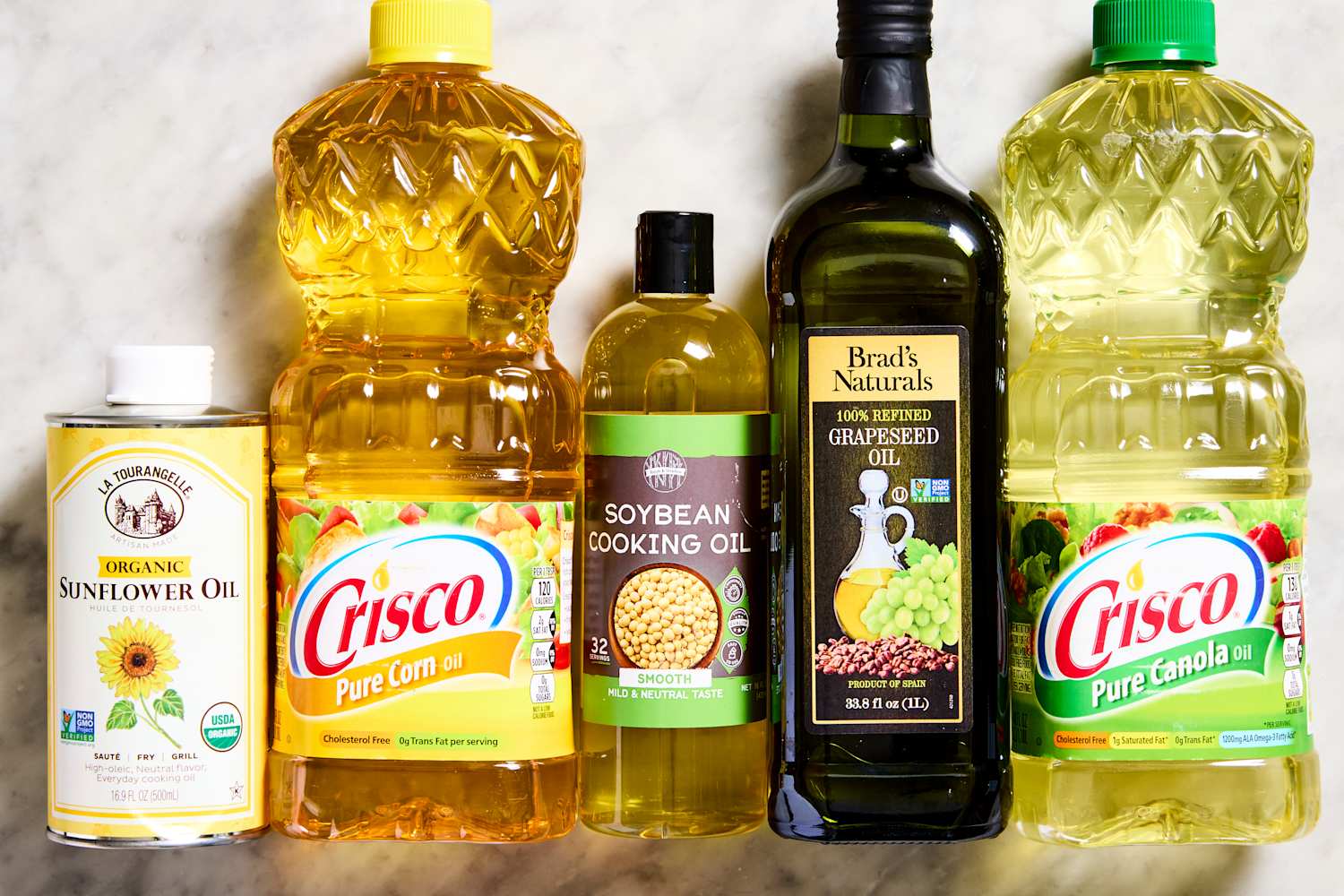
1. Canola Oil: A Practical Everyday Choice
Canola oil is widely used in commercial kitchens because it is generally affordable, easy to source and mild in flavour. Its relatively high proportion of unsaturated fats makes it a practical option for frying a wide range of foods.
Best for:
- French fries and potato wedges
- Fried chicken and chicken tenders
- Fish and other battered seafood
- Breaded vegetables and appetizers
Advantages:
- Neutral flavour that does not overpower food.
- Widely available through foodservice suppliers.
- Generally lower in saturated fat than many solid frying fats.
- Suitable for a variety of fried menu items.
Limitations:
Regular canola oil is not necessarily the most stable option for every high-volume frying operation. Its performance depends on its fatty acid composition and how frequently it is heated and reused. High-oleic canola oil may offer better resistance to frying-related deterioration.
Verdict: Regular refined canola oil is a sensible starting point for restaurants looking for a versatile, accessible frying oil. If your kitchen operates a fryer throughout the day, compare it with high-oleic canola before making a long-term purchasing decision.
2. High-Oleic Sunflower Oil: A Strong Option for Repeated Frying
High-oleic sunflower oil is specifically produced to contain a higher proportion of oleic acid, a monounsaturated fatty acid. This composition makes it more resistant to oxidation than conventional sunflower oil.
It is particularly worth considering for foodservice businesses that fry large quantities of food and want consistent results across multiple batches.
Best for:
- French fries and potato chips
- Fried chicken and breaded products
- Onion rings and other appetizers
- High-volume restaurant frying
Advantages:
- Neutral flavour and aroma.
- Higher monounsaturated fat content than conventional sunflower oil.
- Good potential for oxidative stability during repeated frying.
Limitations:
High-oleic sunflower oil may cost more than conventional sunflower or standard canola oil. Availability and pricing also vary by supplier and market.
Verdict: A strong choice when frying consistency and oil stability are more important than choosing the lowest upfront purchase price. Always check the label to confirm that the product is specifically high-oleic sunflower oil.
3. Soybean Oil: A Common Choice for High-Volume Kitchens
Soybean oil is another widely available vegetable oil used in commercial frying. Its neutral taste and relatively accessible price make it attractive to restaurants, fast-food businesses and food manufacturers.
Best for:
- French fries
- Fried chicken
- Fish and seafood
- Breaded and battered appetizers
Advantages:
- Mild flavour.
- Suitable for a broad range of menu items.
- Commonly available in bulk foodservice formats.
- Can be an economical option for kitchens with high oil consumption.
Limitations:
Conventional soybean oil contains a relatively high proportion of polyunsaturated fats. These fats are more susceptible to oxidation during repeated high-temperature use than monounsaturated fats.
High-oleic soybean oil is a different formulation and may provide improved frying stability. Do not assume that findings about high-oleic soybean oil apply to conventional soybean oil.
Verdict: Conventional soybean oil can work for everyday frying, particularly when cost and availability matter. For longer frying cycles, compare high-oleic formulations and monitor oil quality rather than relying on the oil type alone.
4. Peanut Oil: Useful for Specialty Frying
Refined peanut oil has a relatively neutral flavour and is often used for frying foods that benefit from a clean, crisp finish.
Best for:
- French fries
- Fried chicken
- Tempura-style foods
- Certain Asian-inspired fried dishes
Advantages:
- Mild flavour when refined.
- Suitable for high-temperature cooking.
- Can provide good frying performance.
Limitations:
Peanut oil requires careful consideration of ingredient declarations, allergen controls and cross-contact risks. Restaurants should confirm the specific product's allergen status with their supplier and follow applicable food-allergen requirements.
It may also be more expensive or less readily available than canola or soybean oil.
Verdict: Peanut oil can be useful for specialty menus, but it is not automatically the best choice for a kitchen serving customers with different allergen needs.
5. Corn Oil: A Versatile but Less Stable Option
Corn oil is a mild-tasting vegetable oil used in both home cooking and commercial food preparation. For a broader overview of common cooking oils, see KimEcopak's guide to vegetable oil.
Best for:
- Fried vegetables
- Breaded appetizers
- Occasional deep-frying
- General-purpose cooking
Advantages:
- Neutral flavour.
- Widely available.
- Useful for multiple cooking applications.
Limitations:
Corn oil contains a substantial proportion of polyunsaturated fats. This composition can make it more vulnerable to oxidation during repeated high-temperature frying compared with oils richer in monounsaturated fats.
Verdict: Corn oil can be suitable for occasional frying, but high-volume kitchens should compare its performance and replacement frequency with more oxidation-resistant alternatives.
6. Palm Oil: An Option for Specific Frying Applications
Palm oil is used in some commercial food production and frying applications because of its composition and physical properties. Depending on its formulation, it can remain semi-solid or solid at room temperature.
Best for:
- Certain commercial frying applications
- Food manufacturing
- Recipes requiring specific fat characteristics
Advantages:
- Can offer good resistance to oxidation compared with some highly polyunsaturated oils.
- Available in different formulations for food production.
- Useful where a particular texture or fat consistency is required.
Limitations:
Palm oil generally contains more saturated fat than canola or sunflower oil. Its environmental considerations also depend on sourcing and production practices. A business should assess the specific product rather than treating all palm oil as identical.
Verdict: Palm oil may suit certain production requirements, but it is not automatically the best everyday choice for restaurants seeking a balance of frying performance and unsaturated fat content.
Best Deep-Frying Oils Compared
| Oil | Main advantage | Main limitation | Best fit |
|---|---|---|---|
| Regular canola | Accessible, neutral and versatile | Stability varies by formulation | Everyday restaurant frying |
| High-oleic sunflower | High monounsaturated fat content | May cost more | Repeated, high-volume frying |
| Soybean | Widely available and economical | Conventional type is more oxidation-prone | General foodservice frying |
| Peanut | Suitable for high-temperature cooking | Allergen considerations and cost | Specialty menus |
| Corn | Neutral flavour and versatile | Higher polyunsaturated fat content | Occasional frying |
| Palm | Useful physical properties and frying stability | Higher saturated fat content | Specific commercial applications |
Which one should you choose?
- Best everyday value: Refined canola oil.
- Best option to investigate for repeated frying: High-oleic canola or high-oleic sunflower oil.
- Best bulk alternative: Soybean oil, with the formulation and oil-management requirements taken into account.
- Best for specific specialty applications: Refined peanut oil, where allergen controls are appropriate.
There is no single oil that will perform best in every fryer. A high-oleic formulation may justify a higher purchase price if it maintains acceptable quality for longer, but this needs to be evaluated under your kitchen's actual operating conditions.
What Temperature Should You Use for Deep Frying?

Oil temperature affects the colour, texture, cooking time and oil absorption of fried foods.
Many recipes use a temperature around 350–375°F (177–191°C). However, the correct setting depends on the food, fryer, oil formulation and operating guidance. Some food-safety authorities recommend keeping commercial frying oil within a narrower range to reduce deterioration.
For example, Hong Kong's Centre for Food Safety recommends 150–180°C for deep-frying and advises reducing the temperature to 120–130°C when the fryer is idle. These figures are useful operational guidance, not a universal legal requirement for restaurants in Canada or the United States.
A few practical rules can help maintain consistent frying conditions:
- Use a reliable thermometer. Do not rely only on the fryer's temperature dial.
- Avoid overcrowding the basket. Adding too much food at once can cause the oil temperature to drop.
- Dry food surfaces where appropriate. Excess moisture can increase splattering and contribute to oil deterioration.
- Remove excess batter and crumbs. Loose particles can burn and contaminate the oil.
- Follow recipe and equipment guidance. Different foods and fryer designs require different settings.
Maintaining a stable temperature is often more useful than simply choosing an oil with an extremely high smoke point.
How to Keep Deep-Frying Oil Fresh for Longer
The cost of frying oil can become a significant operating expense, particularly for restaurants that prepare fried food throughout the day. However, extending oil life should never come at the expense of food quality or safe kitchen practices.
1. Filter Oil Regularly
Food particles, breadcrumbs and batter residues accumulate in frying oil during service. If they remain in the fryer, they can burn and accelerate oil deterioration.
Use an appropriate filtration process to remove food debris. Follow the fryer and filtration equipment manufacturer's instructions, including safe handling procedures for hot oil.
2. Avoid Excessive Heating
Heating oil for long periods when the fryer is not being used can accelerate deterioration.
During quieter periods, follow the equipment manufacturer's recommended idle-temperature settings. Switch off and cover the fryer when it is no longer needed, following your kitchen's safety procedures.
3. Keep Water and Food Residues Under Control
Water, moisture and food particles contribute to chemical changes in frying oil.
Before frying:
- Drain excess liquid from prepared ingredients.
- Remove loose ice crystals from frozen food where preparation instructions permit.
- Avoid dropping large amounts of wet batter or breadcrumbs into the fryer.
These practices help maintain oil quality and reduce splattering.
4. Monitor Oil Condition Instead of Following a Fixed Reuse Count
There is no universal number of frying cycles that guarantees oil is still suitable for use. Oil deterioration depends on its composition, frying temperature, food type, operating hours, filtration and storage conditions.
Watch for warning signs such as:
- Unusual darkening or a rancid smell.
- Smoke appearing at normal frying temperatures.
- Persistent or unusual foaming.
- A thicker, sticky texture.
- Fried food developing an unpleasant or stale flavour.
For higher-volume operations, total polar compounds (TPC) testing can provide a more objective indication of oil deterioration. Follow the applicable local requirements and your food-safety procedures when deciding when to discard oil.
Do not attempt to extend the life of badly degraded oil simply by adding fresh oil.
Choosing Packaging for Deep-Fried Takeout Food
Selecting the right frying oil is only one part of delivering a good fried-food experience. Packaging also matters, especially when customers order French fries, fried chicken, onion rings or other crispy foods for takeaway and delivery.
Hot fried food releases steam after cooking. If that moisture becomes trapped, the coating can soften before the customer opens the package. The right container should therefore match the food portion, shape, temperature, grease exposure and expected delivery time.
For example:
- Fried chicken and larger portions: Consider sturdy containers with enough room to hold the food without crushing its coating.
- French fries and potato wedges: Choose a suitable serving format that allows practical handling and helps manage moisture.
- Mixed fried meals: Consider compartmentalized containers when keeping different foods separate is important.
KimEcopak offers several foodservice packaging formats, including clamshell containers for takeaway meals and hot food packaging options. Check the exact product specifications, including material, coating, temperature suitability and grease resistance, before selecting a container for a particular menu item.
If you are reviewing packaging alongside your menu and service requirements, explore eco-conscious packaging solutions at KimEcopak to discuss suitable options for your foodservice operation.
FAQs
What is the healthiest oil for deep frying?
No single oil makes deep-fried food automatically healthy. If comparing fat composition, oils richer in monounsaturated fats, such as canola and high-oleic sunflower oil, are worth considering. Overall dietary health also depends on the food, portion size and frequency of consumption.
Is olive oil suitable for deep frying?
Refined olive oil can be used for frying when its specifications suit the required cooking temperature. Extra virgin olive oil has a different flavour and composition, so it is not always the most practical choice for high-volume commercial frying. Compare the product's intended application, cost and frying performance before selecting it.
Can restaurants reuse deep-frying oil?
Oil can sometimes be reused, but only while it remains suitable under the business's food-safety procedures. Filter out food particles, control temperature and monitor the oil's appearance, smell, smoking and foaming. Replace degraded oil rather than relying on a fixed number of uses.
Is high-oleic sunflower oil better than regular sunflower oil?
High-oleic sunflower oil contains more monounsaturated fat than conventional sunflower oil. This generally gives it better resistance to oxidation during high-temperature cooking. However, actual performance still depends on the formulation and how the oil is used and maintained.
How often should a restaurant change its frying oil?
There is no reliable universal schedule based only on days or frying cycles. Oil quality depends on operating conditions, food residues, temperature, filtration and the type of oil. Restaurants should follow their food-safety procedures, monitor oil condition and use objective testing where appropriate.
Conclusion
The best oil for deep frying depends on your menu, budget and frying volume. Refined canola is a practical everyday option, while high-oleic canola and sunflower oils are worth considering for operations that need better resistance to repeated heating. Whichever oil you choose, consistent temperature control, regular filtration and timely replacement are essential for maintaining food quality and managing kitchen costs.
Related Articles
- How Do Restaurants Make Grilled Cheese? – Explore pan cooking, heat control, and practical restaurant techniques.
- Food Truck Packaging Guide: Falafel on Wheels
- How Long Do Cooked French Fries Last? – Understand fried food handling and post-cooking storage.


