“Falafel on wheels” sounds playful but for operators, it’s a serious challenge: keeping a fried product crispy, sauces contained, and orders presentable while you’re moving fast in a tight space. If you searched Falafel on Wheel, you’re likely thinking about a mobile setup (food truck, pop-up, catering trailer) or a delivery-heavy falafel concept. This guide is built for Canadian cafés, restaurants, and food trucks that want a repeatable system: the right menu formats, the right packaging, and a pack-out workflow that protects quality after 10–20 minutes in the real world. We’ll also link to practical packaging options from KIMECOPAK because on wheels, your container is not just a box; it’s part of the recipe.
- Falafel Mistakes: 12 Costly Errors That Make Falafel Fall Apart (and Restaurant Fixes for Canada)
- What to Serve with Falafel: 35 Best Sides, Sauces, and Menu Combos for Canadian Restaurants
- Falafel Platter for Restaurants: Portioning, Packaging & Catering System
- Falafel Food Truck Guide: Best Menu Items to Order + How Great Falafel Trucks Run
What Is Falafel on Wheels?

Why Google shows menus, reviews, and order pages
This keyword cluster often behaves like a brand query (people looking for a specific business). But operators searching it typically want something broader: “How do I sell falafel from a truck without sogginess, leaks, or complaints?”
The good news: you can still win the intent by delivering what directories don’t—a complete operator playbook that makes falafel travel like a premium item.
How to win the operator angle without fighting navigational SERP
Instead of trying to “out-rank” menu pages, you rank by providing:
- packaging and workflow specifics
- takeout quality control (steam management)
- catering builds
- cost and waste math
That’s the content customers don’t get from “menu + photos,” and it’s the content you can use internally to train staff.
Your Core Falafel Menu (Built for Speed on Wheels)
Wrap/pita builds that travel well
Wraps are fast sellers—but fragile. A good on-wheels falafel wrap has:
- a stable base (patty or tightly packed balls)
- sauces controlled (not free-poured)
- crisp-to-moist balance (crunch preserved, not drowned)
Operator tip: Pick one default build and train it like a sandwich line. Too many custom options slow service and increase mistakes.
Bowls and salads (high AOV, low mess)
Bowls are your profit friend on wheels:
- higher perceived value
- easy upsells (extra protein, extra sauce, add side)
- strong photo appeal (drives social proof)
But bowls also have the highest leak risk. Your bowl must be rigid, grease-resistant, and stackable.
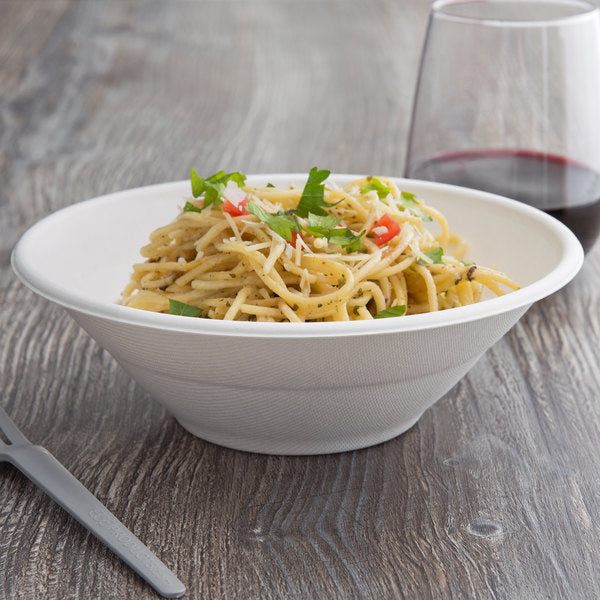
A strong starting point for bowl service is KIMECOPAK’s Biodegradable & Compostable Round Paper Bowl With Lid (great for hot + hearty builds and consistent stacking).
GET A FREE SAMPLE PACKAGING HERE!
Platters and catering trays (best margin, highest risk)
Platters are where you make money—and where you lose it if packaging fails. Platters combine:
- hot falafel
- wet sides (salad, pickles)
- sauces (tahini, hummus)
- breads
If those components touch too early, your crispness collapses. Platters demand separation and structure.
The #1 Quality Problem on Wheels: Steam (And How It Ruins Falafel)
Why falafel turns soft in closed containers
Falafel is a crust-and-steam battle:
- you create a crisp crust with hot oil/heat
- the interior releases steam after cooking
- if you trap that steam, the crust absorbs moisture and softens
On wheels, you feel this problem more because:
- orders get bagged quickly
- hot items get sealed for travel
- customers may not eat immediately
The 10/20/30-minute hold test you should run weekly
If falafel is core to your concept, run this quick test weekly (especially when staff changes):
- Cook your falafel as usual
- Pack it in your normal container
- Taste at 10, 20, 30 minutes
- Record crispness, breakage, and customer “bite experience”
If your product fails at 20 minutes, it’s not necessarily your recipe. It’s your pack-out system.

The “don’t pack it hot” rule (and what to do when you must)
Best practice: let falafel vent briefly before sealing.
Reality: rush hours don’t always allow it.
When you must pack hot:
- avoid stacking falafel pieces tightly
- separate wet items in cups/containers
- choose packaging that doesn’t trap steam aggressively
- include a reheating note (“air fryer 3–4 minutes”) to protect reviews
Packaging System by Order Type (This Is the Money Section)
Wraps: preventing sog + keeping structure
Wraps fail in two ways:
- the bread gets soggy
- fillings slide and explode at first bite
Packaging rules for wraps:
- wrap should be tight and supported (not floating in a big box)
- sauces controlled (pre-portioned, not excessive)
- wet toppings limited or separated for longer deliveries
If your customers often add fries, don’t stack fries directly onto wraps (steam transfer). Use separate containers so each item stays true.
Bowls: leak prevention, grease resistance, stacking
Bowls are your best delivery format if packaging is right:
- use a rigid, leak-resistant bowl
- avoid overfilling with saucy items
- keep sauces in separate cups for crispness control
Platters: compartments, separation, transport stability
Platters should be built like a “system,” not a pile:
- falafel stays dry and hot
- salad stays cold
- pickles stay separate
- sauces stay sealed
If you can’t use compartment trays, you can still achieve separation by bundling:
- one container for hot falafel
- one for cold salad/pickles
- sauce cups for hummus/tahini
That separation alone can cut soggy complaints dramatically.
Sauce cups: tahini/hummus separation that protects crunch
Sauces are the #1 crispness killer—yet also the #1 flavor driver.
Standardize sauce handling:
- default sauce portion size
- sauce always in cups (not poured over falafel for delivery)
- label cups when you offer multiple sauces
This reduces mess, reduces refunds, and makes orders feel more premium.
Pack-Out SOP for Rush Hours (Consistency Across Staff)
Assembly line sequence (hot → cool/vent → seal → label)
Your pack-out SOP should be trainable in 15 minutes. Here’s a sequence that works:
- Cook/finish falafel
- Brief vent time (even 30–60 seconds helps)
- Pack falafel in hot container (don’t crush/stack tightly)
- Add sauces in cups
- Pack cold sides separately
- Seal + label
- Bag with stacking rules (hot separate from cold)
Write it on a laminated sheet. On wheels, memory fails under pressure—systems don’t.
Portion standards that reduce complaints (balls per wrap, sauce oz)
Standardize:
- falafel pieces per wrap
- patty count per bowl
- sauce ounce per order
- topping volume (too much salad = sog, too little = perceived value drop)
Consistency is the fastest way to improve reviews without changing ingredients.
Tamper-evident + labeling workflow (delivery trust)
Delivery customers want confidence. Labels help:
- order accuracy
- allergen clarity (sesame/tahini is a big one)
- brand identity
Even a simple label turns “food truck meal” into “professional meal.”
For wider packaging strategy and sustainability positioning, refer to the internal guidance: Restaurant Food Packaging: Sustainable Solutions.
Cost & Waste Control (Buyer-Centric)
Packaging cost per order vs refund/remake cost
Operators often try to minimize packaging cost per order, but the real math is:
Total cost = packaging + refunds + remakes + lost repeat customers
If a slightly better container reduces sogginess and leaks, it can:
- reduce remake frequency
- reduce negative reviews
- increase repeat orders
That’s not a soft benefit. It’s margin protection.
The 3 most common waste points (breakage, leaks, sog)
Track these for two weeks:
- Breakage (crumbled falafel pieces, crushed wraps)
- Leaks (sauces, wet salads, oily sides)
- Sog (steam-softened falafel, wet bread)
Each waste point maps to a fix:
- breakage → rigid containers + stacking rules
- leaks → correct bowl/lid + portion control
- sog → venting + separation of wet items
Catering math: portions, sides, and packaging bundles
Catering is profitable when you standardize bundles:
- platter size (small/medium/large)
- falafel count per platter
- sauce cup count per platter
- side volume per platter
Branding on Wheels (Make It Look Premium Without Slowing Service)

Labels that sell (menu name, heat tips, allergens)
A good label includes:
- item name (so customers don’t guess)
- sauce name (tahini, garlic, spicy, etc.)
- reheating tip (protect crispness)
- allergen note (sesame is common; dairy if you use sauces)
This reduces complaint emails and increases trust.
Simple brand touches: stickers, inserts, reheating note
Keep it minimal:
- one sticker seal
- one reheating instruction
- one brand line
Your goal is premium feel with zero extra labor.
Photo-ready presentation for social proof
On wheels, your best marketing is customer photos. A clean bowl, intact wrap, and neat sauce cups create a photo moment—especially when your packaging looks cohesive.
If you sell drinks alongside falafel (a common combo), align your beverage packaging with your food presentation using Paper Cup Supplier – To Go Cups with Lids.
Practical Regulations & Customer Trust Notes (Canada-First, Non-Legal)
Allergen callouts that matter most for falafel (sesame/tahini)
Sesame is a major allergen and tahini is common in falafel service. Even if you don’t add sesame to falafel itself, sauces and garnishes can introduce it. Clear labeling reduces risk and protects customer trust.
“Vegan/vegetarian” clarity and cross-contact reality
Falafel is often plant-based, but your kitchen may handle meat, dairy sauces, and shared fryers. Keep claims aligned with reality:
- if you share fryer oil with meat products, don’t overpromise
- train staff on clear customer questions and honest answers
Safe cooling/holding basics for mobile operations
On wheels, temperature control matters:
- don’t seal steaming-hot foods into airtight containers and then store them warm for long periods
- keep cold items cold and separated
- avoid leaving finished orders in direct heat
These habits protect both quality and customer safety expectations.
FAQs: Falafel on Wheels

How do you keep falafel crispy for delivery?
Use a system: avoid stacking hot falafel tightly, allow brief venting, pack sauces separately, and keep wet toppings away from falafel until eating. Add a reheating note for customers to restore crispness quickly.
Should sauces be packed separately?
Yes, especially tahini, hummus, and pickled toppings. Separate sauces protect crispness, prevent leaks, improve presentation, and make the order feel more premium.
How do you pack falafel for catering without sogginess?
Separate hot falafel from cold/wet sides, use sauce cups, and avoid sealing falafel while heavily steaming. Standardize platter tiers and container sizes so staff can pack quickly and consistently.
Conclusion: A Simple System That Protects Crispness, Margin, and Brand
Falafel on wheels is not just about cooking. It’s about travel performance. Your best falafel can still fail if steam is trapped, sauces spill, or packaging collapses under stacking. When you standardize the menu formats (wraps, bowls, platters), create a simple rush-hour SOP, and use containers that match the job, falafel becomes one of the most reliable items you can sell—highly repeatable, highly customizable, and highly profitable.
Start with the three fixes that move the needle fastest:
- Venting-aware pack-out (don’t trap steam)
- Sauce separation (cups, labels, portion standards)
- Rigid, stackable containers (reduce leaks and crush)