


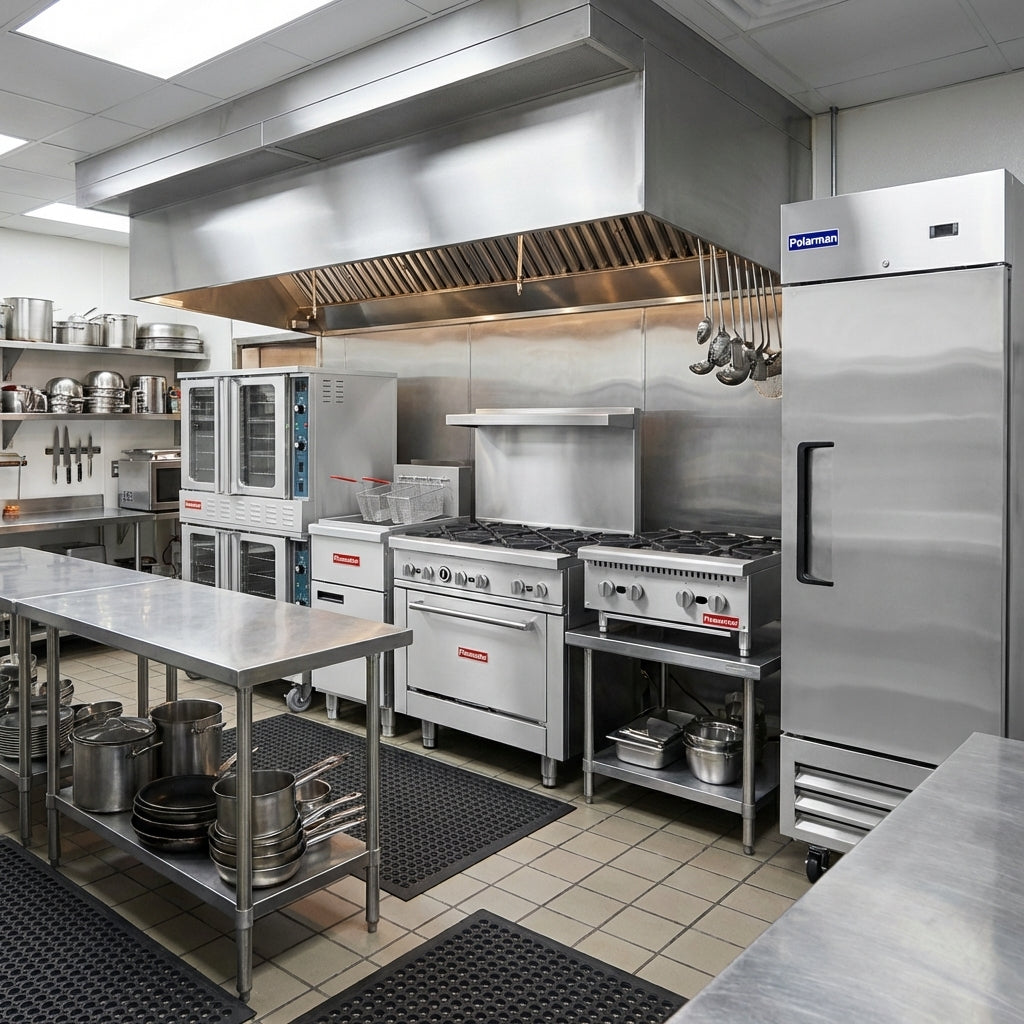
Leasing restaurant equipment can help restaurant owners access the commercial kitchen equipment they need without paying the full purchase price upfront. From refrigerators and commercial ovens to dishwashers and coffee machines, these investments can put pressure on cash flow before a restaurant has established consistent revenue.
Whether you're opening your first café, upgrading an established restaurant or preparing to expand into another location, understanding your financing options is essential. This guide explains how restaurant equipment leasing works, when it makes financial sense, what to check before signing an agreement and how to plan your equipment investment alongside other operating expenses.
Related Articles You May Find Interesting to Discover
- Falafel Food Truck Guide
- Food Truck Packaging Guide: Falafel on Wheels
- Quiche Box Guide: Best Quiche Packaging in Canada
- Donut Packaging
What Restaurant Equipment Leasing Actually Involves
Restaurant equipment leasing is a financing arrangement in which a leasing company purchases or provides equipment and allows your business to use it in exchange for scheduled payments over an agreed period.
Unlike purchasing equipment outright, leasing generally does not give your restaurant immediate ownership. Ownership remains with the leasing company unless the agreement provides an option to purchase the equipment later.
A typical leasing arrangement follows this process:
- Identify your equipment needs. Determine which appliances, machines or kitchen systems your restaurant requires.
- Request a financing proposal. Provide the leasing company with equipment quotations and relevant business information.
- Review the agreement. Compare the payment schedule, lease duration, fees, maintenance obligations and end-of-term conditions.
- Receive and use the equipment. Once the agreement is approved and completed, the equipment becomes available for business operations.
- Manage payments throughout the term. Make payments according to the agreed schedule.
- Decide what happens at the end. Depending on the contract, you may have options to purchase, renew, return or upgrade the equipment.
The exact process and available options depend on the leasing provider and agreement. Some arrangements are designed primarily for equipment use, while others are structured to lead towards eventual ownership.
Which Restaurant Equipment Is Worth Considering for Leasing?
Not every restaurant purchase needs financing. Leasing is generally worth evaluating for equipment that represents a significant investment, supports essential operations or would be expensive to replace unexpectedly.
Here are some common equipment categories to consider.
| Equipment category | Examples | Why leasing may be considered |
|---|---|---|
| Refrigeration | Commercial refrigerators, freezers, display coolers | Essential for food storage and daily operations |
| Cooking equipment | Commercial ovens, ranges, grills and fryers | Often represents a substantial initial investment |
| Food preparation | Mixers, slicers, food processors | Supports consistent and efficient preparation |
| Dishwashing | Commercial dishwashers and washing systems | Helps manage recurring cleaning requirements |
| Beverage equipment | Espresso machines, coffee brewers and ice machines | Important for cafés and beverage-focused businesses |
| Ventilation | Commercial exhaust hoods and related systems | Can involve substantial installation costs |
Before leasing, consider whether the equipment is essential, how frequently it will be used and how long you realistically expect to keep it.
For example, a bakery that depends on a commercial mixer every day may benefit from predictable financing arrangements. A small café testing a new beverage concept, however, might prefer a shorter-term rental or a lower-cost alternative until demand becomes more established.
Leasing vs. Buying vs. Renting: Which Option Makes More Sense?
These three financing approaches serve different business needs. The right choice depends on your available capital, expected equipment lifespan and how much flexibility your restaurant requires.
| Decision factor | Leasing | Buying | Renting |
|---|---|---|---|
| Initial investment | Usually lower than outright purchase | Generally higher | Usually lower |
| Ownership | Depends on end-of-term options | Immediate ownership | No ownership |
| Payment structure | Scheduled payments | Upfront payment or loan instalments | Rental payments |
| Commitment | Contractual term | Depends on financing, if any | Often shorter-term |
| Equipment upgrades | Depends on agreement | Owner decides | Often easier to change |
| Maintenance | Depends on contract | Owner's responsibility | May be included |
| Long-term cost | Depends on fees and buyout | Depends on purchase and maintenance costs | Can become expensive with extended use |
Leasing may suit restaurants that:
- Want to preserve cash for payroll, inventory and other operating expenses.
- Need expensive equipment but prefer scheduled payments.
- Expect their equipment requirements to change.
- Have identified a suitable lease with acceptable total costs.
Buying may suit restaurants that:
- Have sufficient capital available.
- Expect to use the equipment for many years.
- Prefer full ownership and control.
- Want to avoid ongoing contractual payments.
Renting may suit restaurants that:
- Need equipment for temporary operations or seasonal demand.
- Are testing a new menu or business concept.
- Require short-term replacement equipment.
- Want to avoid a longer financing commitment.
The important distinction is not simply which option has the lowest monthly payment. Compare the total amount paid over the expected period of use, including maintenance, financing charges and any final purchase cost.
The Financial Advantages and Risks of Leasing Restaurant Equipment
Leasing can make equipment acquisition more manageable, but restaurant owners should understand both sides before committing.
1. Preserve Working Capital
Opening a restaurant involves more than purchasing kitchen appliances. You also need money for rent, employee wages, ingredients, utilities, marketing, insurance and other recurring expenses.
Leasing can reduce the amount of cash committed to equipment at the beginning. This may leave more working capital available to support daily operations and unexpected expenses.
However, lower initial costs do not eliminate the financial obligation. Your restaurant must still generate sufficient cash flow to cover the scheduled payments.
2. Make Equipment Costs More Predictable
A fixed payment schedule can make financial planning easier because you know when payments are due and how much you are expected to pay.
This can be useful when preparing monthly budgets or forecasting operating expenses.
Nevertheless, predictable payments do not necessarily mean predictable total costs. Installation, maintenance, insurance, delivery and contract-related charges may be billed separately.
3. Access Equipment Without Waiting to Accumulate the Full Purchase Price
A restaurant may need a replacement refrigerator or dishwasher immediately to maintain operations.
Leasing can provide another way to access essential equipment without first saving the entire purchase amount. Approval, equipment delivery and installation timelines still depend on the provider and the specific arrangement.
4. Understand the Long-Term Financial Trade-Offs
Leasing also has disadvantages that should not be overlooked:
- Potentially higher total costs: Payments, financing charges and buyout fees can make leasing more expensive than purchasing.
- Limited ownership rights: You may not own the equipment even after making years of payments.
- Contractual obligations: Ending an agreement early may involve substantial charges.
- Maintenance uncertainty: Repairs may remain your responsibility even when you do not own the equipment.
- Equipment restrictions: Modifications, relocation or replacement may require approval.
A lease is only financially beneficial when the value of preserving cash and accessing equipment justifies the full cost and contractual commitment.
7 Things to Check Before Signing a Restaurant Equipment Lease
A financing proposal should be evaluated beyond its advertised monthly payment. Use this checklist to understand what your restaurant is actually committing to.

1. Calculate the Total Lease Cost
Ask for a complete breakdown of the financial commitment.
Include:
- Initial deposit or down payment, if applicable.
- Recurring lease payments.
- Interest or financing charges.
- Documentation and administrative fees.
- Delivery and installation.
- Insurance and maintenance.
- Final purchase or buyout amount.
For example, suppose your restaurant receives an offer to lease equipment for $450 per month over 48 months, with a $1,500 initial payment.
Your basic commitment would be:
| Cost component | Amount |
|---|---|
| Monthly payment | $450 |
| Lease duration | 48 months |
| Total scheduled payments | $21,600 |
| Initial payment | $1,500 |
| Basic total commitment | $23,100 |
This illustration excludes taxes, installation, maintenance and other possible charges. Compare the $23,100 commitment with the equipment's outright purchase price and any applicable end-of-term costs.
2. Understand the Ownership and Buyout Conditions
Never assume that completing all scheduled payments automatically transfers ownership.
Ask whether the agreement includes a purchase option, how the buyout price is calculated and whether additional fees apply.
If you intend to keep the equipment long-term, the final ownership cost should be part of your initial comparison.
3. Clarify Maintenance and Repair Responsibilities
Commercial kitchen equipment experiences regular wear from frequent use.
Before signing, establish who pays for routine servicing, replacement parts, emergency repairs and equipment breakdowns.
For essential equipment such as refrigerators and commercial dishwashers, unexpected downtime can affect food operations and service quality.
4. Review Early Termination Conditions
Restaurant performance can change. A business might relocate, close, change its menu or no longer need a particular piece of equipment.
Check whether the agreement allows early termination, equipment returns, transfers or contract modifications. Understand the financial consequences of each option before committing.
5. Check the Equipment's Condition and Specifications
If you're leasing used equipment, request documentation about its age, condition, service history and remaining expected useful life.
Also confirm that the equipment meets your operational requirements, including electrical connections, ventilation, dimensions, capacity and installation requirements.
6. Review Insurance and Liability Requirements
Some agreements require the lessee to maintain insurance covering the equipment.
Clarify who is responsible for loss, theft, accidental damage and liability during the lease period. Confirm whether your existing commercial insurance policy provides the required coverage.
7. Compare Multiple Financing Proposals
Request comparable proposals from more than one provider.
Make sure you're comparing the same equipment specifications, lease duration, payment frequency and end-of-term conditions. A lower monthly payment may simply reflect a longer commitment or a different ownership arrangement.
Tax Considerations: Are Restaurant Equipment Lease Payments Deductible?
Tax treatment is another important consideration when evaluating restaurant equipment financing.
However, lease payments are not automatically deductible in the same way for every business or every agreement. The treatment depends on the jurisdiction, business structure and how the contract is classified for tax purposes.
For Canadian businesses, the Canada Revenue Agency provides guidance on deducting qualifying business leasing costs. Certain qualifying lease arrangements can also be treated differently, with payments separated into principal and interest and capital cost allowance potentially available.
For businesses in the United States, the Internal Revenue Service distinguishes genuine lease agreements from conditional sales contracts. The classification can affect whether payments are treated as rental expenses or whether the equipment is treated as purchased property.
Restaurant owners should therefore:
- Obtain the complete financing agreement.
- Confirm how the arrangement is classified.
- Keep invoices and payment documentation.
- Discuss the applicable tax treatment with a qualified accountant.
Do not select a lease solely because someone advertises tax savings. Evaluate the full financial arrangement first.
Plan Your Equipment Investment Alongside Other Restaurant Expenses
Leasing equipment is only one part of managing restaurant startup and operating costs.
A restaurant also needs a practical budget for inventory, staffing, utilities, cleaning supplies and customer-facing materials. Packaging, in particular, is an ongoing operating expense that should be planned separately from major equipment financing. For restaurants offering takeout and delivery, consider the cost of containers, bags and other foodservice supplies when preparing your purchasing forecast.
If you are reviewing packaging formats for your restaurant's menu, delivery requirements or brand presentation, explore eco-conscious packaging solutions at KimEcopak to discuss suitable options for your foodservice business.
The goal is to avoid committing too much capital to equipment while leaving insufficient funds for the everyday supplies that keep your restaurant operating.
FAQs
Is leasing restaurant equipment better than buying?
It depends on your available capital, expected equipment lifespan and business priorities. Leasing can help preserve working capital, while buying may be more economical when you have sufficient funds and expect to use the equipment for many years.
Can a new restaurant lease commercial kitchen equipment?
Yes. New restaurants can explore equipment leasing, although approval requirements vary between providers. A financing company may assess the business owner's credit history, financial position, business information and equipment quotation before making a decision.
What happens if leased restaurant equipment breaks down?
The answer depends on the maintenance and repair provisions in your contract. Some agreements may include certain servicing arrangements, while others make the restaurant responsible for repairs and replacement parts. Always clarify these responsibilities before signing.
Can I buy restaurant equipment at the end of a lease?
Some agreements provide an end-of-term purchase option, but others require equipment to be returned or offer different renewal arrangements. Check the contract for the exact buyout price, conditions and additional charges.
How long should a restaurant equipment lease last?
The appropriate duration depends on the equipment's expected useful life, business stability and financing terms. Ideally, avoid committing to payments that continue significantly beyond the period in which the equipment is expected to remain useful to your restaurant.
Conclusion
Leasing restaurant equipment can be a practical way to access essential kitchen appliances while keeping more capital available for daily operations. However, the right decision requires looking beyond monthly payments and understanding the total cost, maintenance obligations, ownership options and tax implications. Compare multiple proposals, assess your restaurant's cash flow and choose a financing arrangement that supports long-term operational stability rather than simply reducing your upfront expenses.


